Saudi Arabia’s East-West Crude Oil Pipeline has been hit by an attack that cut throughput by 700,000 barrels a day, intensifying concern over regional supply disruptions.
Oil prices fell below $95 a barrel and global stocks rallied after President Donald Trump announced a two-week ceasefire with Iran, though the truce remained fragile.
The upper house has approved Japan’s biggest budget in history, locking in higher spending on social security, education and defense despite worries over debt and the yen.
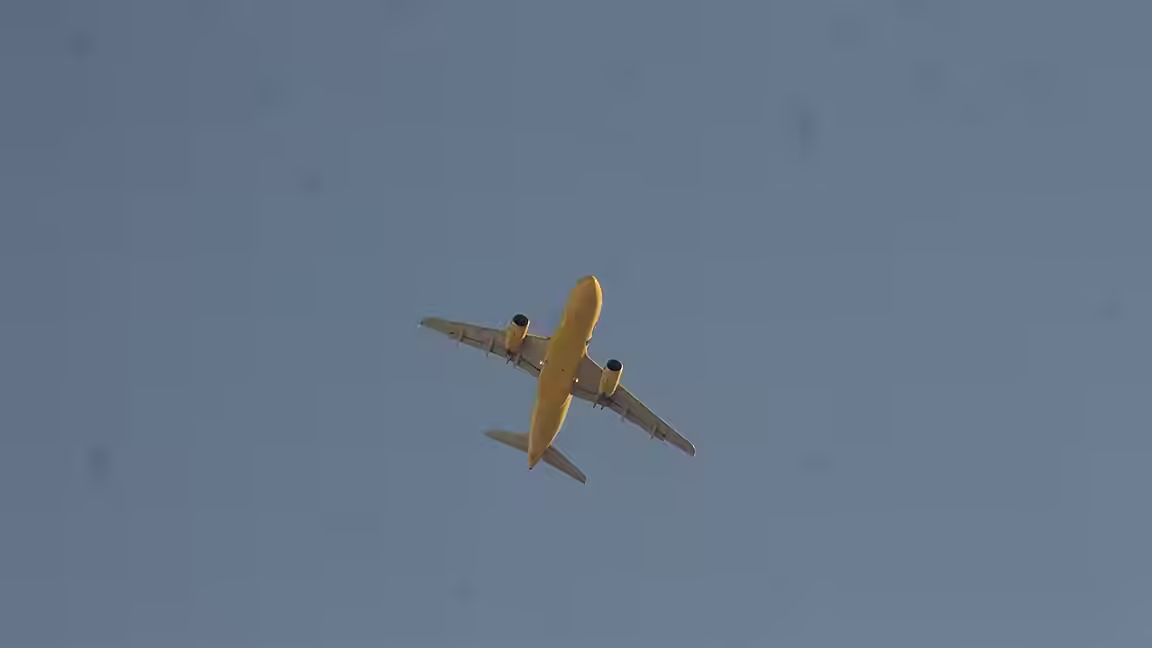
AirAsia says it still plans to launch its Bahrain hub in June, even as the Middle East conflict disrupts air corridors and forces airlines to rethink their networks.
The producer group added 206,000 barrels per day for May while warning that damage to energy infrastructure and shipping routes is worsening volatility.
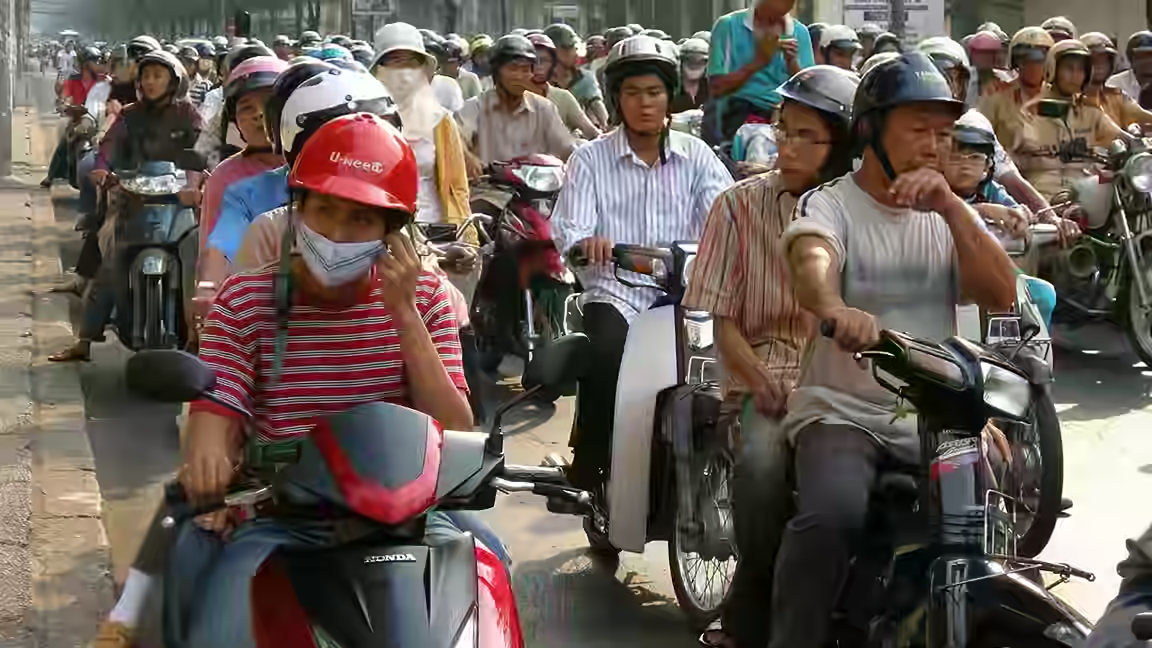
Officials in Islamabad and Punjab are moving to blunt the impact of steep fuel price increases with free or subsidized state transport, while protests grow over the cost of living.
Oil prices jumped to more than $113 a barrel while gasoline and diesel costs rose again, deepening concern that the conflict in the Middle East is feeding inflation at home.
The national average for regular gasoline reached $4.02 a gallon, its highest level since 2022, as the Iran war kept oil markets tight and disrupted supply.
Equity markets rallied sharply on Tuesday following reports that both Washington and Tehran may be nearing a conclusion to their month-long military engagement.
A New York appeals court has reversed a $16.1 billion award against Argentina in the long-running YPF nationalization case, saying the shareholders’ breach-of-contract claims do not stand under Argentine law.
South Sudan has begun rotational power cuts in Juba and Mauritius says it is restricting electricity use after a fuel supply shock tied to the Iran war.




![Sujet : Chemins de fer Tourisme Transports ferroviaires Affiche Langue : sans contenu linguistique Éditeur : [s.n.] Imp. Chaix (Suc[ursa]le Chéret 18 rue Brunel (Paris)](/media/articles/commons-ac0e1240ee8b.avif)