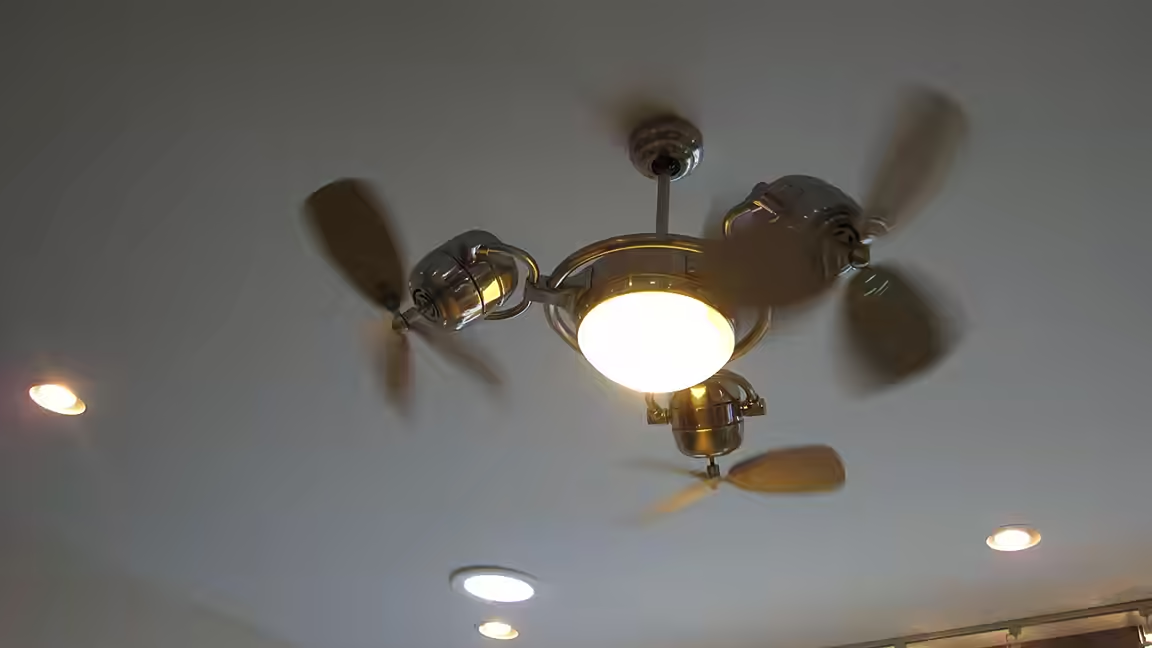
A familiar appliance takes unfamiliar forms
Ceiling fans are being redesigned around integrated lighting, direct-to-consumer retail and a growing appetite for fixtures that double as decorative objects. A survey published on October 1 by architecture critic Kate Wagner’s McMansion Hell blog describes a market full of products that blur the boundary between fan and lamp.
The examples range from so-called fandeliers, which combine chandelier styling with concealed or retractable blades, to flush-mounted lights containing small transparent fans. Other models place decorative forms around a conventional rotor or use unusual blade shapes to make the appliance look more like sculpture than ventilation equipment.
Wagner said she reviewed more than 100 ceiling fans after searching for ways to update a fixture in her apartment. Her account is criticism rather than a market study, but it captures how broad the online selection has become and identifies recurring construction and design choices across the products she examined.
LEDs remove an old constraint
Integrated LED lighting is central to the shift. A replaceable bulb once imposed a familiar arrangement on a combined light and fan. Built-in LEDs can instead be distributed through rings, tubes and other forms, giving manufacturers much more freedom over a fixture’s silhouette. That flexibility has encouraged hybrids in which the fan is visually subordinate to the light.
The trade-off is repairability. Wagner notes that many of the fixtures are inexpensive, often selling below $200, but use LED components that may not be replaceable. A failed light can therefore turn the entire fan-and-lamp assembly into waste even when its motor remains usable.
Online retail also changes which products reach buyers. Large marketplaces can list many closely related models without maintaining showroom inventory. Overseas manufacturing and established delivery networks make it economical to offer numerous variations, while product rankings and sales data encourage sellers to iterate on formats that already attract attention.
The result is not a single new ceiling-fan standard. It is a proliferation of related designs: crystal fixtures with hidden blades, compact fans embedded in circular lights, bordered rotors and products whose decorative blades do not move at all. Wagner’s critique is sharply skeptical of many examples, especially those that sacrifice airflow or serviceability for appearance. Yet the collection also shows a mature household technology being reworked by LEDs and ecommerce. The fan has not disappeared; in many current products, it has become one component inside a lighting object.