The United States installed a record 20.2 gigawatt-hours of battery storage during the second quarter of 2026, according to figures from the Solar Energy Industries Association and Benchmark Mineral Intelligence reported by Electrek. The quarter lifted first-half additions to 30.8 GWh, 23 percent more than in the same period a year earlier.
Utility-scale batteries accounted for about 18 GWh of the quarterly total. Seven projects delivered at least one gigawatt-hour each: four in Arizona, two in California and one in Utah. Arizona added 6.2 GWh, the largest quarterly total recorded for a single state, while Texas installed 3.8 GWh and California added 3.6 GWh.
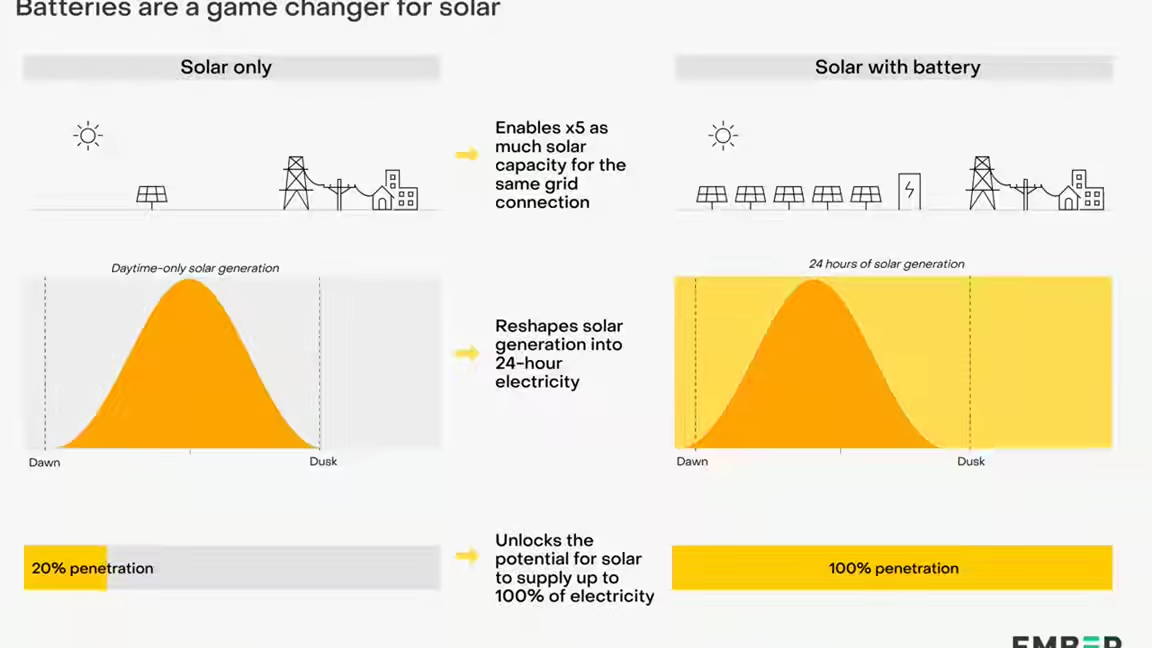
The projects were split between batteries paired with solar generation and standalone systems. Solar-plus-storage accounted for 44 percent of utility-scale capacity installed during the quarter, with standalone batteries making up the remaining 56 percent. Both configurations can move electricity across time, charging when supply is plentiful and discharging when demand and prices rise. That ability is especially useful during hot evenings, when solar production falls while air-conditioning load can remain high.
The report found that batteries supplied more electricity to the US grid in the first eight months of 2026 than during all of 2025. More than 10 percent of the country's operating battery capacity entered service in the second quarter alone. Benchmark raised its storage forecast through 2030 by 11.5 percent to 683 GWh and now expects about 71 GWh to be installed during 2026, roughly 20 percent above 2025.
Growth was not evenly distributed across market segments. Residential installations fell to 657 megawatt-hours in the quarter, down 27 percent from a year earlier. The report linked the drop partly to removal of the federal residential clean-energy tax credit and to installations being brought forward into 2025 before the incentive changed. Benchmark forecasts home-battery additions will decline 16 percent for the full year after growing 56 percent in 2025.
Commercial and industrial installations reached about 1.8 GWh. Benchmark expects data centers to become an important source of demand as developers combine storage with on-site generation to manage grid constraints and rapidly changing loads. Manufacturing expanded as well: Tesla opened a third Megafactory in Texas, designed for 50 GWh of annual Megapack production, and began shipping units using domestically manufactured lithium-iron-phosphate cells.
The quarterly figures show grid batteries moving from a market concentrated in California and Texas toward broader adoption. Arizona's surge was the clearest example. The pace also underscores the growing role of storage as power demand rises, although forecasts remain sensitive to project permitting, grid connections, equipment supply and future policy changes.