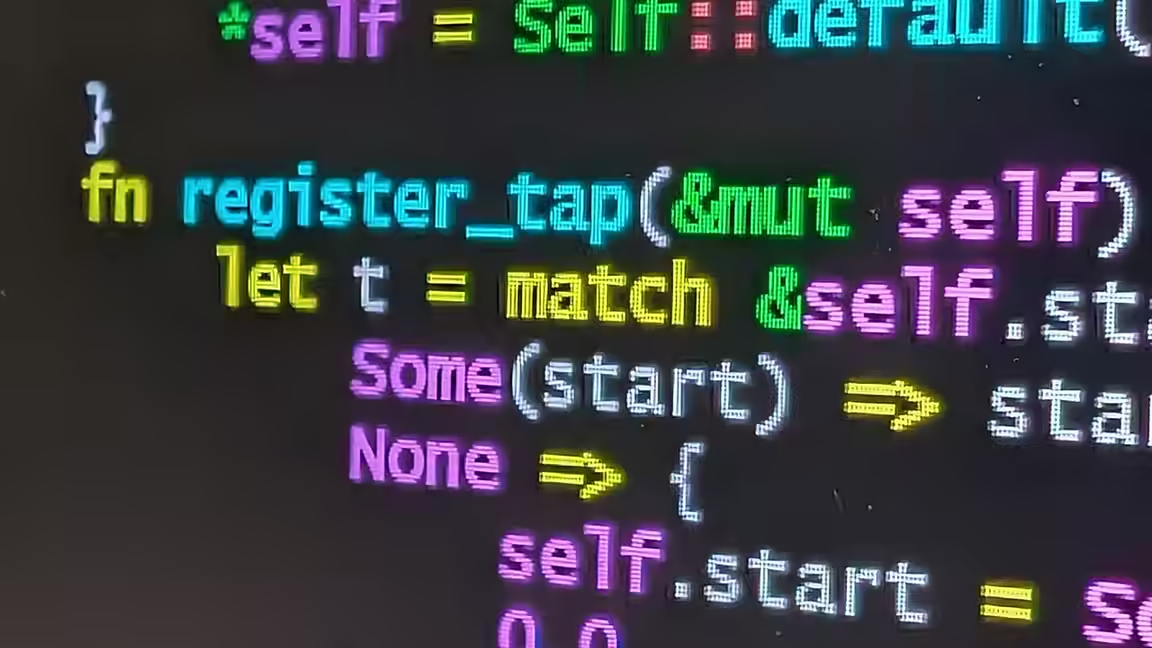
OpenIDEA has introduced an open-source integrated development environment that aims to reproduce many of the working patterns associated with IntelliJ IDEA in a native application built around a Rust core. The project is available for macOS, Windows and Linux and is licensed under Apache 2.0.
The software combines an editor with code intelligence, debugging, Git integration, a terminal, database tools and an HTTP client. Its maintainers say the environment supports more than 60 programming languages. The interface adopts an IntelliJ-style keymap, tool-window layout and broad search function, offering developers a recognizable workflow without presenting the application as a JetBrains product. The project explicitly says it is not affiliated with JetBrains and acknowledges IntelliJ IDEA as a JetBrains trademark.
OpenIDEA's positioning is less about inventing a new interaction model than assembling familiar professional-development features in a fast native package. That makes the project relevant to developers who value the conventions of established IDEs but want to examine or modify the underlying implementation. An Apache 2.0 license permits broad use and contribution, while a separate third-party license file documents bundled assets.
The repository also publishes an early performance comparison. In one test, the maintainers opened the roughly 770-file Python project Freqtrade on Windows 11 using a 32-core AMD system with 62GB of memory. The published figure is described as a median across five runs with warm caches. However, the maintainers caution that the comparison does not measure equivalent work: IntelliJ IDEA performs deeper Python analysis, so the moment each program appears ready is not directly comparable. They provide the testing materials so users can repeat the exercise on their own machines and projects.
That qualification is important. Startup responsiveness can shape daily use, but it does not establish parity in refactoring, language analysis, plugin depth, debugging or project management. OpenIDEA's feature list signals broad ambition; the repository evidence supplied for this announcement does not establish that every tool has the maturity of a long-established commercial IDE.
The project's immediate test will therefore be practical adoption. A familiar layout may lower the learning curve, while the Rust core and native builds could appeal to users seeking responsiveness. At the same time, developers will judge the product on language-specific accuracy, reliability across large repositories and the quality of its integrated tools. For now, OpenIDEA is best understood as an open-source, cross-platform attempt to translate an established IDE workflow into a newly built native application, with its own maintainers appropriately limiting the conclusions that can be drawn from early measurements.