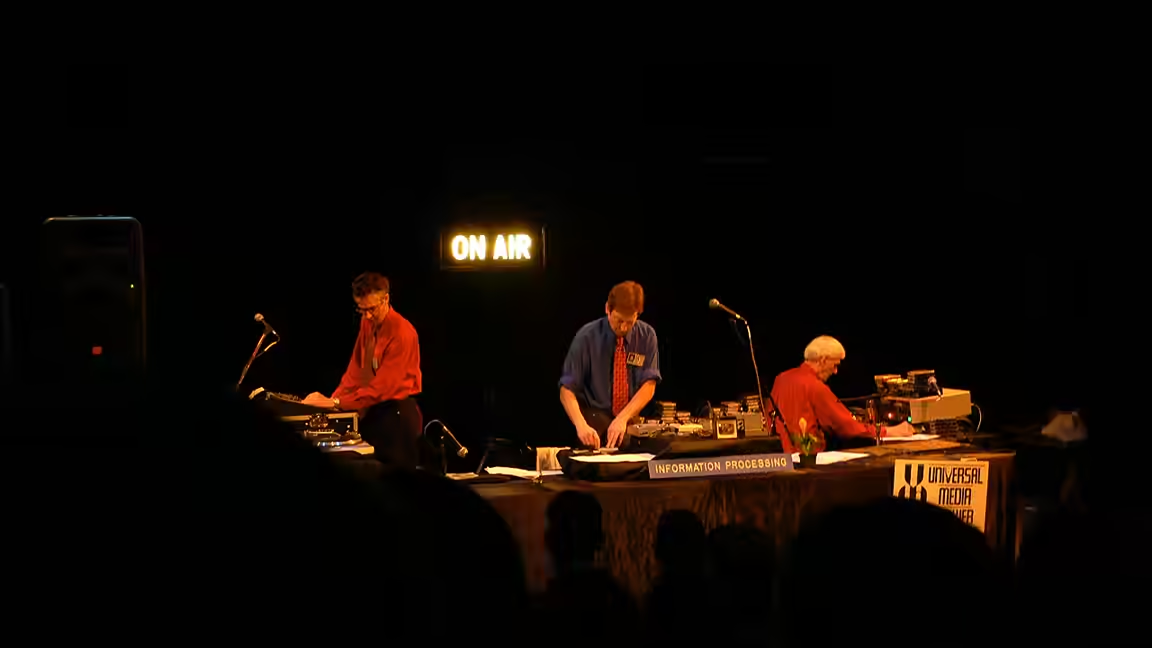
Experimental multimedia collective Negativland is performing at the Internet Archive's San Francisco headquarters on September 16, extending a relationship that has also preserved thousands of hours of the group's long-running radio program. The show, titled Over The Edge: Significantly Less Deceptive, combines sound, music, radio, humor and improvisation.
Co-founder Mark Hosler is scheduled to appear onstage with Jon Leidecker, known as Wobbly, while fellow founder David Wills contributes by telephone from Seattle. That distributed setup reflects how the group continues to collaborate after more than four decades of changing membership and evolving production technology.
Negativland began in the California Bay Area in 1980, when Hosler, Wills and Richard Lyons issued a self-titled record with handmade covers. What started as an expectation of selling a small number of copies grew into a catalog of more than 30 albums and EPs, alongside books, visual art, radio broadcasts and live events. The collective combines found material with original work and helped popularize the phrase "culture jamming" for art that rearranges and critiques media culture.
That practice has repeatedly tested the boundary between appropriation and ownership. A prominent dispute followed Negativland's 1991 release built around U2's "I Still Haven't Found What I'm Looking For." U2 and its label sued over copyright, trademark and defamation claims, and the case was settled. Negativland later turned the episode into the book-and-CD project Fair Use: The Story of the Letter U and the Numeral 2, using its own legal conflict as material for a broader discussion of corporate control, law and artistic reuse.
Radio has been another central part of the project. Over The Edge began in 1981 as a weekly freeform program and was shaped for many years by collaborator Don Joyce. In 2015, the Internet Archive partnered with Negativland to preserve and provide public access to more than 4,000 hours of broadcasts. Leidecker now hosts the program on Berkeley station KPFA, and the first 34 years are available through the archive.
The group's work spans audio sampling, photography, graphics, exhibitions and performance rather than fitting a single music category. Its personnel have remained fluid, with collaborators also contributing video and web design. Negativland has generally avoided centering promotional images of its members, directing attention toward the work instead of individual personalities.
The September performance is therefore more than a retrospective concert. It places a still-active collective inside an institution preserving the media history from which its art is made. The Internet Archive's account of the event also frames Negativland's longevity as a story about adapting collage and criticism across records, broadcast radio, online archives and remote live performance.