A voluntary exit program
Flock Safety has offered employees voluntary separation packages as the surveillance-technology company faces customer losses and sustained criticism of its license-plate reader network. Applications opened on September 18 and employees have until October 2 to decide whether to seek a buyout, according to an internal message reported by WIRED.
The company told staff that it expects to approve most applications. Workers whose requests are accepted are due to learn the decision on October 9, with most departures planned for October 29. Some employees could be asked to remain for an additional one to three months.
The reported package includes severance, several months of health coverage and up to two years to exercise stock options. People familiar with the offer told WIRED that some packages reach tens of thousands of dollars. Flock described the arrangement internally as its most generous separation offer and said it was intended to give employees more choice. The company did not respond to the publication's request for comment.
Flock employs roughly 1,500 people. The number who will apply, and how many positions the company ultimately intends to remove, remain unknown. A voluntary program does not by itself establish that broader layoffs will occur.
Pressure on the camera network
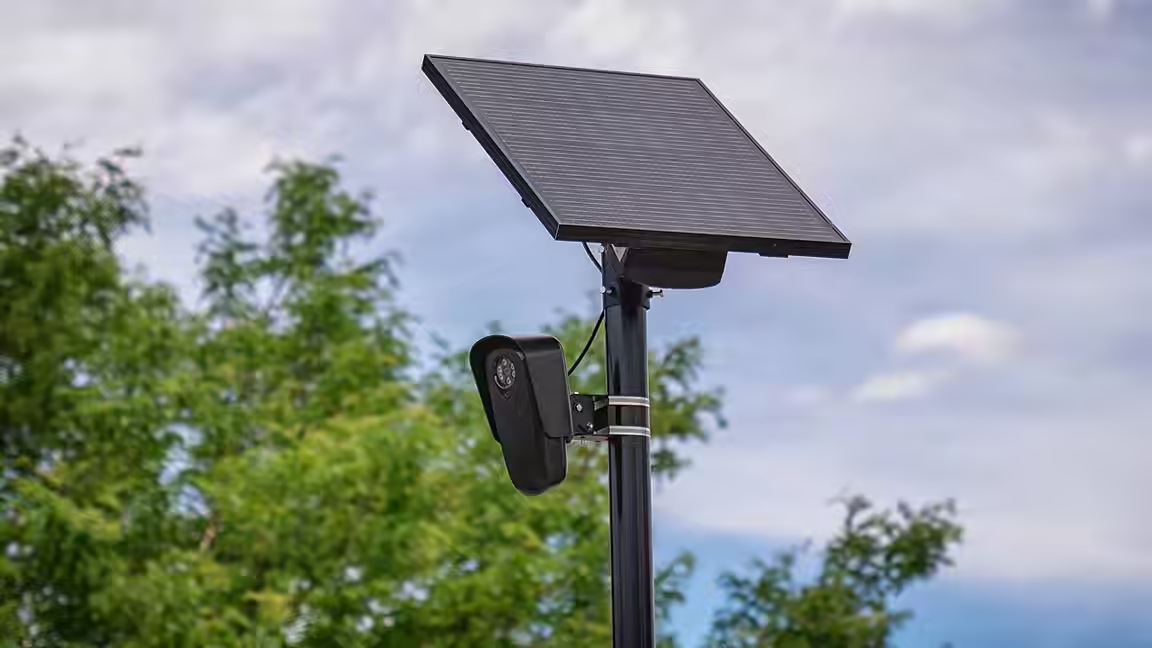
The offer comes as local governments reconsider contracts for Flock's automated cameras. The devices capture license plates and other vehicle information for use by police and participating organizations. Critics have raised concerns about the breadth of data collection, sharing between agencies and alleged misuse by individual officers.
One advocacy group counted 93 city and county governments that ended ties with Flock during August. WIRED reported that the number of local governments dropping the service in 2026 was about three times the total over the preceding five years. Contract nonrenewals could reduce expected revenue, while vandalism directed at cameras has increased costs.
Chief executive Garrett Langley said in a recent podcast appearance that the backlash had most strongly affected employee morale. Flock argues that its products are intended to improve public safety, but the company now has to address both staff unease and political resistance to widespread vehicle tracking.
Expansion beyond plate readers
The business, founded in 2017, completed a funding round in April at a valuation above $8 billion and has raised about $1.2 billion in venture capital, according to the report. It has also developed products beyond its core plate-reader network. Those include AI-assisted investigative tools designed to search police records and camera feeds, identify vehicles or drivers, and find associations based on movement patterns.
That expansion may increase the capabilities available to customers, but it also broadens the privacy and accountability questions facing the company. The immediate test will be how many employees accept the separation offer and whether contract losses continue after the October departures.