From line editors to a programmable screen
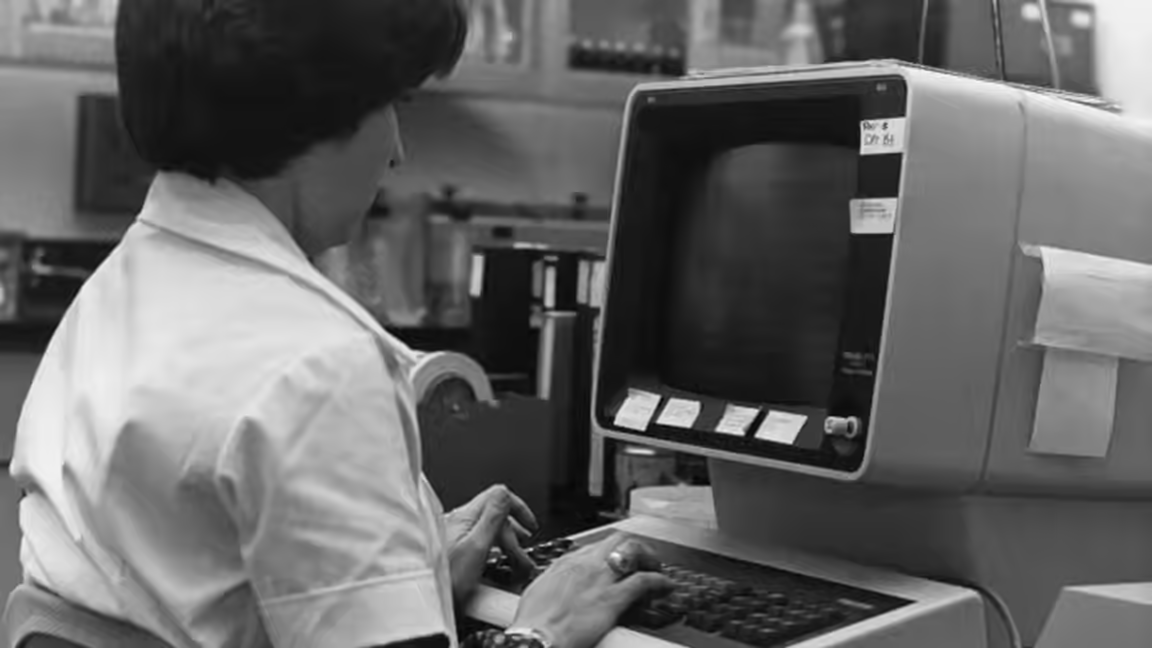
Emacs reached its 50th year in 2026, marking half a century since the editor first ran on video terminals at the MIT Artificial Intelligence Laboratory. Its longevity is unusual in computing, but its larger significance lies in two ideas that became central to modern software: tools that users can extensively customize and communities that share improvements.
The editor emerged from TECO, a program created by Dan Murphy in 1962 for MIT's PDP-1 computer. TECO began as the Tape Editor and Corrector, with letter commands for operations such as inserting or deleting text. It later became a language in which programmers could build editing macros.
In 1971, Carl Mikkelsen built Control-R, a TECO add-on that displayed changes directly on video terminals. That reduced the need to print lines repeatedly, although the display initially exposed only a small portion of a file. Richard Stallman encountered a full-screen editor during a 1976 visit to Stanford's AI laboratory and returned to MIT intent on improving Control-R. His architecture made each key invoke a macro, opening the system to extensive customization.
As lab members created different command sets, Guy Steele sought a shared standard so programmers could more easily use and debug one another's setups. Steele, David Moon, Stallman and others converged on a common collection of commands. The name Emacs referred to editor or editing macros. What began partly as an attempt to solve a coordination problem became a flexible editor used for writing programs, messages and ordinary text.
Sharing became part of the design
Stallman distributed Emacs without a purchase price to people who supplied magnetic tape and return postage. The arrangement asked users to send improvements back, framing participation as membership in a software-sharing community. Other implementations followed, including versions for Multics and a commercial version associated with James Gosling.
The rise of proprietary versions helped motivate Stallman's later GNU Project, which sought to build an operating system that users could freely share and modify. GNU Emacs became the project's first major application, initially running on Unix before spreading to numerous platforms.
Emacs also left traces outside its own application. Apple included GNU Emacs with Mac OS X beginning with the operating system's 2001 release, though it stopped shipping that version in 2019. Emacs-style navigation commands remain available in parts of Apple's software.
The editor's continued use after five decades reflects more than familiarity. Its programmable core lets users reshape workflows rather than accept a fixed interface. Just as importantly, its early distribution model connected technical adaptability with an expectation that improvements could circulate—a combination that influenced the culture and tooling of free software well beyond text editing.