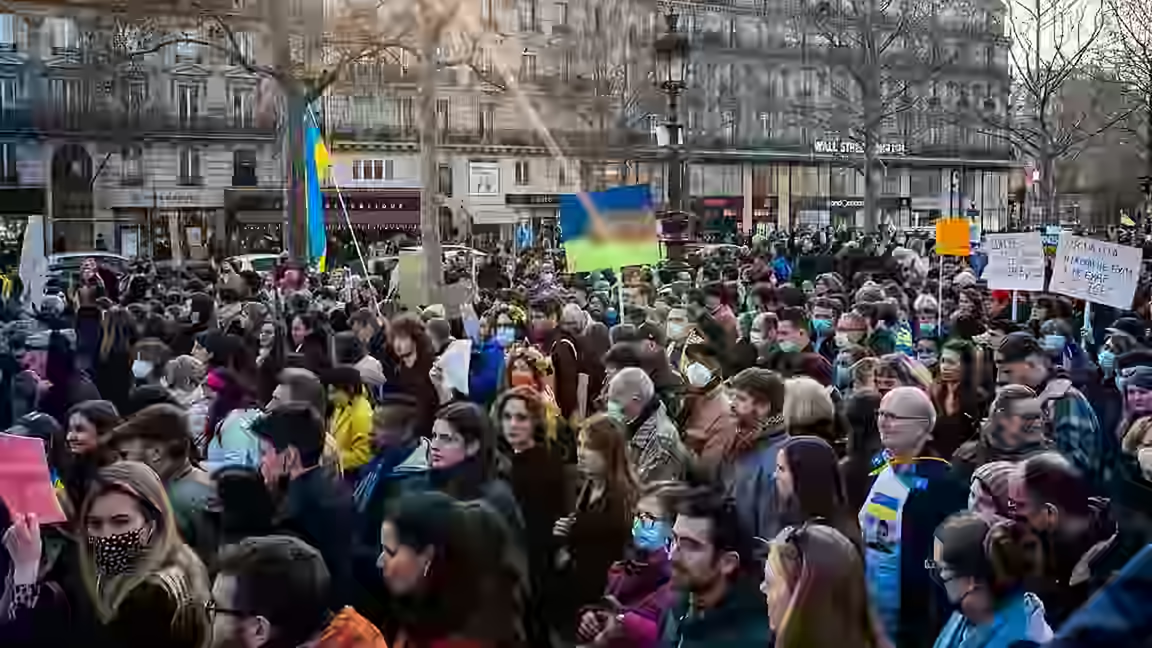
Hundreds of thousands of people demonstrated across France on October 17, with large, mostly peaceful processions accompanied by violence and property damage in several cities. France’s Interior Ministry put nationwide participation at about 550,000, while organizers estimated 800,000, according to FranceInfo’s live reporting.
The demonstrations brought together students, “yellow vest” activists and other groups expressing grievances that included education, health services and purchasing power. In Paris, FranceInfo described a procession carrying a broad range of demands, while some gatherings elsewhere occurred without authorization. The competing turnout estimates nevertheless agreed that the mobilization reached well into the hundreds of thousands.
Violence broke out around marches in Paris, Lyon and Marseille, among other locations. Reports described attacks on public buildings and shops as well as looting. In Paris, Mayor Emmanuel Grégoire said the damage appeared extensive, with entire streets affected. Images from areas near Place de la Madeleine and Place de la République showed debris after the unrest.
Limoges suffered one of the day’s most serious incidents when a fire devastated the city hall. Local lawmakers Manon Meunier and Damien Maudet condemned the destruction, while Limoges Mayor Guillaume Guérin characterized those responsible as organized vandals rather than opportunistic offenders. Local officials announced a march by elected representatives for the following day. The available report did not establish who started the fire or provide a final assessment of the damage.
President Emmanuel Macron said those who attacked prefectures, shops and municipal buildings would be pursued and punished. He sought to distinguish the people responsible for violence from demonstrators expressing their demands peacefully. Justice Minister Gérald Darmanin also called for a rapid and firm legal response, including requests for pretrial detention in cases involving attacks on police, firefighters, public buildings and businesses.
Participants and organizers similarly attempted to separate the political mobilization from the destruction. Louis Letoublon, vice president of the student organization Les Lycéens!, described the unrest as regrettable and condemnable while arguing that it did not erase the scale of student participation. Coppélia Moreau of Interfac IDF said public discussion should also address the social conditions behind the anger.
The contrasting messages underscored the two narratives emerging from the day: a nationwide show of dissatisfaction and a series of serious public-order incidents around some marches. The supplied reporting did not provide a consolidated arrest or injury count, so no such total can yet be stated reliably. It also remained too early to quantify the cost of damage in the affected cities.
Authorities’ next steps were expected to include criminal investigations and security planning for any follow-on demonstrations. The final political impact will depend on whether participating groups can sustain a common agenda after a day in which their demands competed for attention with images of fires, damaged buildings and clashes.