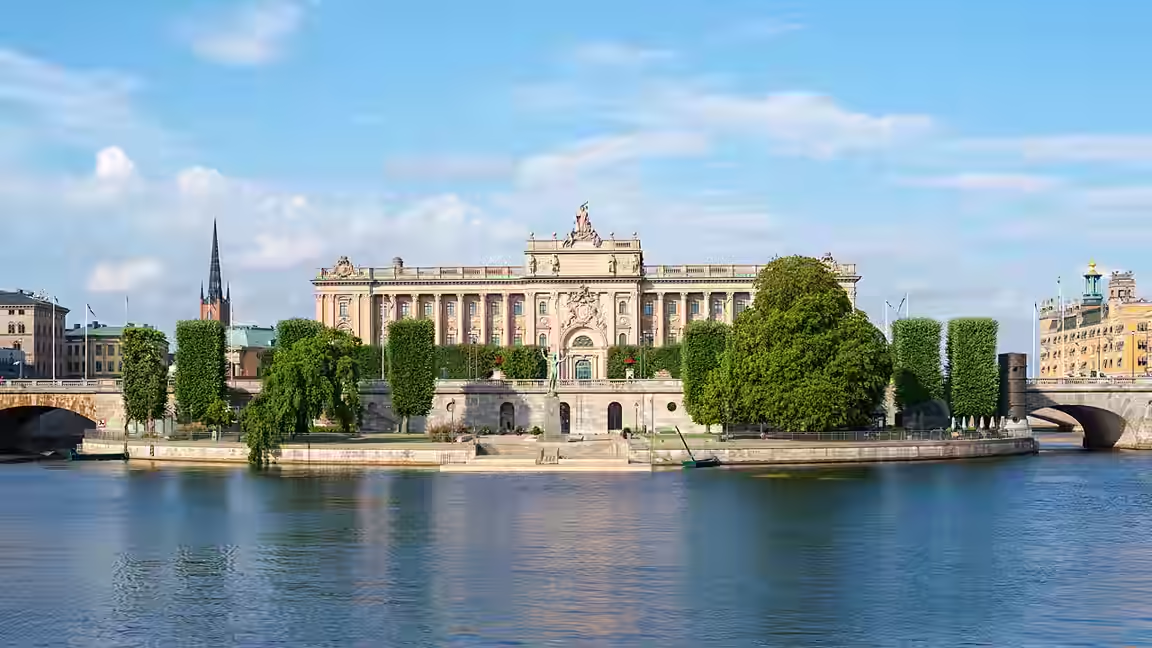
Two blocs compete for government
Swedish voters went to the polls on September 13 in a general election that could return the center-left opposition to power or bring the Sweden Democrats into national government for the first time. All 349 seats in the Riksdag were being contested, with the race tightening after earlier opinion polls had indicated a clearer opposition advantage.
Prime Minister Ulf Kristersson leads the right-wing bloc and is seeking another term for his Moderate Party-led administration. His alliance includes the Sweden Democrats, a right-wing populist party that has supported the government from outside the cabinet. Kristersson has promised the party important government posts if the bloc wins, marking a significant change in its path from parliamentary outsider to potential governing partner.
The four-party opposition is led by Magdalena Andersson, the former prime minister and head of the Social Democrats. Her party has governed Sweden for much of the past century and remains the country’s largest. The opposition campaign has emphasized strengthening the welfare state and responding to higher household costs. Andersson told supporters on the eve of voting that the choice was between a government led by her and one heavily influenced by the Sweden Democrats.
Kristersson has campaigned on his government’s efforts to reduce gang and organized crime and tighten immigration policy. Supporters present those policies as evidence that the coalition can improve security. Critics argue the approach has weakened civil liberties and placed unfair pressure on immigrant communities. The outcome will indicate how voters weigh those concerns against demands for a stronger response to violence and crime.
Sweden Democrats approach power
Sweden Democrats leader Jimmie Akesson told a Stockholm rally that his party had already reshaped national politics. The party entered parliament in 2010 and has since gained enough support to become central to the right’s governing arithmetic. DW reported that Akesson was expected to become migration minister if the right-wing alliance prevailed. No result was available in the supplied evidence at the time of writing.
The prospect distinguishes Sweden from countries where mainstream conservative parties maintain a strict barrier against governing with far-right parties. It would also formalize a relationship that has already allowed Kristersson’s administration to rely on Sweden Democrat support in parliament.
About eight million people were eligible to vote in a country of 10.6 million. Roughly half had already cast advance ballots, reflecting Sweden’s extensive early-voting system. Turnout in Swedish national elections regularly exceeds 80%. Polling stations were due to close at 20:00 local time, with initial results expected later Sunday night.
Because the contest is organized around multiparty blocs, the largest individual party will not necessarily determine who governs. Seat totals and negotiations within each alliance will shape whether Andersson can assemble a center-left administration or Kristersson can continue with the Sweden Democrats participating directly in cabinet.